
This story originally ran on New Jersey Family on March 12 2026. Click here for the original article
Fertility isn’t always something women think deeply about until they’re ready to start a family, and by then, they may realize there’s a lot they didn’t know. Dr. Lucky Sekhon, MD, a double board certified reproductive endocrinologist and fertility specialist at Reproductive Medicine Associates of New York (RMA of NY), and mom of two daughters, has spent her career helping women navigate that knowledge gap guiding patients through infertility, IVF, egg freezing and age related fertility challenges.
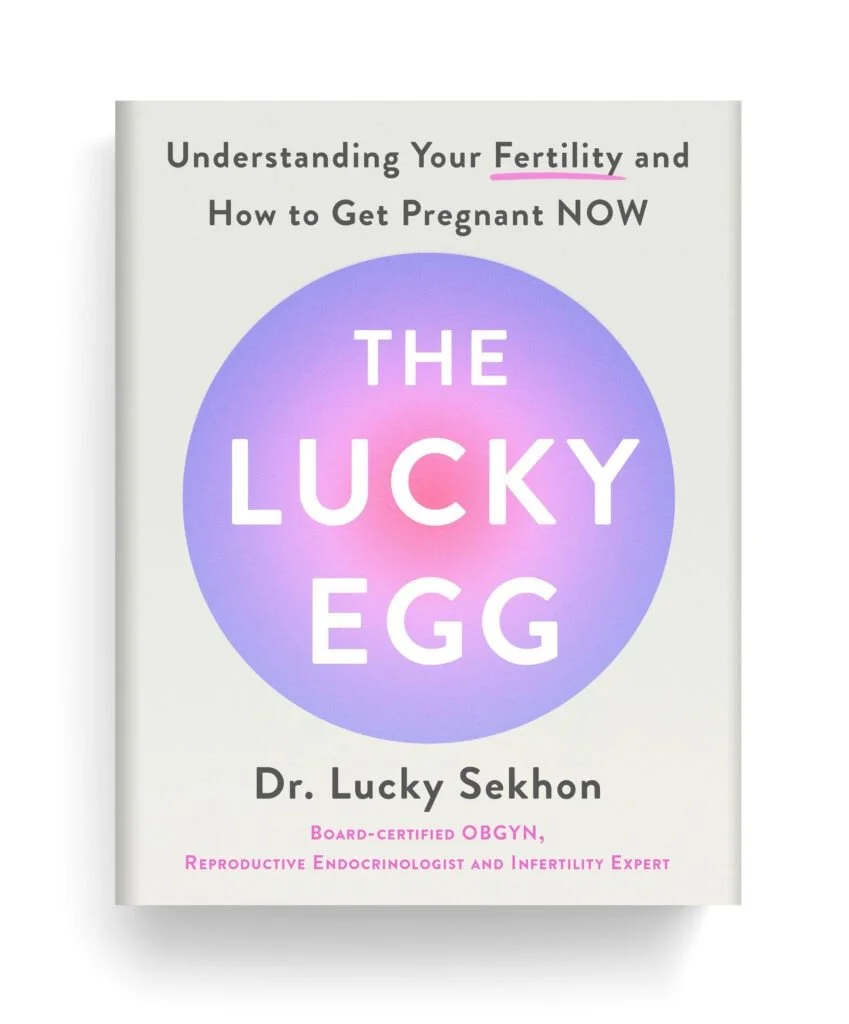
Known as Dr. Lucky, the author of The Lucky Egg: Understanding Your Fertility and How to Get Pregnant Now will now be a part of the Intentional Happiness keynote panel at Let’s Talk Women’s Health & Wellness on March 14 at NJPAC in Newark. Now in its fourth year, the Let’s Talk symposium attracts more than 800 women, who come to experience a wide range of activities and connect with experts and the community in the health and wellness space.
Dr. Lucky’s message is both scientific and empowering: intentional happiness during a fertility journey isn’t about pretending everything is easy, it’s about reclaiming agency over your body, your choices and your future. Being informed gives you choices and having choices gives you power.
An assistant clinical professor at Mount Sinai, Sekhon is known for breaking down complex topics like IVF, egg freezing and fertility science, not just for her patients, but on Instagram (@lucky.sekhon) and as an expert who has been featured in The New York Times, Vogue, NBC News, and 60 Minutes.
Ahead of the symposium, we asked Dr. Lucky to share what she wishes every woman understood sooner about fertility, from the realities of age related decline to the myths that still persist.
New Jersey Family: You’ve said The Lucky Egg demanded to be written as the roadmap you wish you and every woman had when you began your own journey to motherhood. You’ve also spoken about the urgency of closing the fertility knowledge gap. How did you balance the science of fertility with the real experiences of the women you treat when writing the book?
Dr. Lucky Sekhon: I wrote The Lucky Egg to bridge a gap I saw every day in my practice. Smart, capable women were blindsided by information they were never given. They were doing everything right in their lives, yet no one had walked them through the realities of fertility with honesty. I took the evidence and translated it into the guidance that feels practical and easy to understand. Science lays out the frameworks, including biology, probabilities, and treatment options, but the emotional journey is just as real and important. By intertwining in patients’ stories, I wanted readers to feel seen, not lectured. My goal was to empower women with knowledge, while still honoring the complexity of what they were going through.
What Women Should Know About Age and Fertility
NJF: Where do you still see the biggest gap between what science shows us and what women are told about fertility, especially when it comes to how age affects fertility?
Dr. Lucky: The biggest gap I see is around age related fertility decline. We know that egg quality and quantity decline steadily beginning in the early 30s, with a more significant drop after 35. Yet culturally, many women are told, directly or indirectly, that everything will just work out. We’ve made incredible advances in reproductive technology, and IVF has helped so many families, but it is not a guarantee. Women deserve honest, transparent information earlier, so they can make proactive decisions rather than reactive ones.

Dr. Lucky with her husband and daughters
NJF: There’s so much conflicting information out there. What’s one of the most persistent fertility myths you wish women would release?
Dr. Lucky: One of the biggest myths is that infertility is mostly caused by stress. In reality, it’s the other way around: stress does not cause infertility, infertility causes stress. When someone is navigating a medical diagnosis filled with uncertainty and repeated disappointment, of course it’s stressful. But infertility, pregnancy loss, treatment failures, etc., are NOT your fault. When it comes to fertility treatment, the journey is just as important as the destination, take care of yourself, find ways to live your life and seek joy, even in the face of uncertainty. Infertility is more often a marathon than a sprint, and building resilience along the way is key.
NJF: More women are waiting longer to have kids. What’s the biggest misconception you see when it comes to age and fertility?
Dr. Lucky: There is a common misconception that because women are choosing to have children later in life, our biology has somehow adjusted to match that shift. Social timelines have changed dramatically, but ovarian biology hasn’t. More healthy pregnancies now occur in women’s late 30s and early 40s thanks to medical advances, but those success stories can unintentionally create a false sense of security. What’s often not visible is the additional intervention, time, financial investment and emotional resilience it may take to achieve those outcomes.
When Should Women Freeze Their Eggs?
NJF: Egg freezing is more common but also often misunderstood. What is most important for women to know before making this choice?
Dr. Lucky: Egg freezing is about preserving possibility, not guaranteeing a future baby. It works best when done earlier, ideally before 35, because egg quality is closely tied to age. Success is not just about freezing eggs; it’s about giving yourself a meaningful “head start” should you run into issues getting pregnant and needing to rely on IVF. It depends on how old you are at the time of freezing, and how many mature eggs are retrieved and frozen. Those details matter, which is why this is never a one size fits all decision. The most empowering step is to get a fertility evaluation early, so women can make informed choices based on their own biology, rather than assumptions or fear.
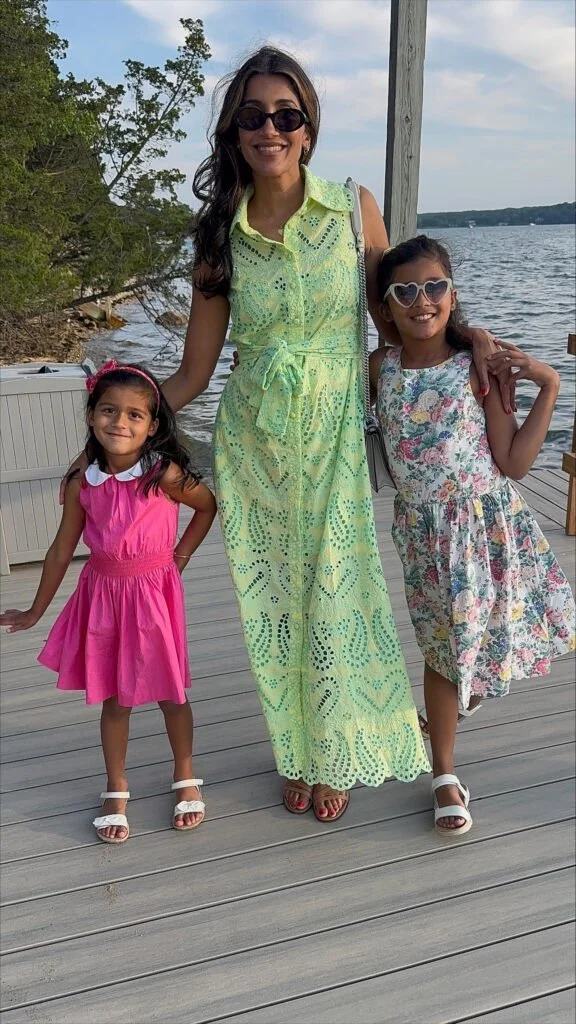
Dr. Lucky and her daughters
NJF: For someone who isn’t ready to have kids yet but wants to be proactive, what are a few steps she can take now to protect her future fertility?
Dr. Lucky: First, get informed. A simple fertility evaluation, which usually includes hormone testing and a pelvic ultrasound, can offer valuable insight into ovarian reserve and overall reproductive health. Second, prioritize overall health. Maintain a healthy weight, avoid smoking, manage chronic conditions, and protect against sexually transmitted infections. Third, consider getting an up to date gynecologic checkup, including a baseline pelvic ultrasound. If issues like fibroids, PCOS, etc., are discovered it can provide options for proactive management. If all tests come back normal, it offers real peace of mind.
The Emotional Toll of Infertility That Many People Don’t See
NJF: You’ve spoken a lot about the mental health toll of infertility. What do you wish more people truly understood about what women are going through?
Dr. Lucky: Infertility is not just a medical diagnosis, it’s a monthly cycle of hope and heartbreak. It touches every part of a woman’s life: her sense of identity, her relationships, her finances, and her mental health. I wish more people understood how isolating and all consuming it can feel. And I wish we could retire the well intentioned but painful platitudes. Telling someone to “just relax” or assuring them that “it will happen” often minimizes what they are going through. What most women need instead is empathy, validation, and the space to feel exactly what they are feeling.
NJF: When women going through fertility are facing repeated disappointment, what do they need most but may not be getting from their doctors and family members?
Dr. Lucky: They need honesty paired with kindness, and clear communication about what to expect. They also need to feel understood. Family and friends can help by simply being there, not by trying to fix everything. From their doctors, it means partnership: feeling like you’re in it together, with a plan and a shared understanding of the road ahead. Most of all, women need to be seen as whole people, not just patients or case numbers, as they move through one of the most vulnerable and challenging seasons of their lives.
NJF: You’ll be a part of Let’s Talk Women’s Health & Wellness’ keynote panel on intentional happiness on March 14 at NJPAC in Newark. Your work makes clear that intentional happiness is not about pretending, but about reclaiming power, over your body, your choices, and your future. What does intentional happiness look like in practice for a woman navigating this difficult journey?
Dr. Lucky: Intentional happiness during fertility challenges is not about pretending everything is fine or pushing aside grief. It is about reclaiming a sense of agency in a process that can often feel out of your control. That can start with educating yourself, building a support system you trust, setting boundaries, and making decisions that truly align with your values. This might mean choosing when and how to engage in treatment, taking breaks, or seeking therapy or community support. In this context, happiness is about constant joy, it is about empowerment. While you cannot control every outcome, you can control how informed you are, who you surround yourself with, and how you care for yourself along the way. I look forward to continuing this conversation at NJPAC and connecting with women in a space focused on education, community, and holistic wellness.
NJF: What’s the one message you want to leave women with to give them strength as they navigate their fertility journey?
Dr. Lucky: You are not behind. You are not broken, and you are not alone. Fertility is biology, not a reflection of your worth, effort or ambition. The more informed you are, the more empowered you become. Knowledge is not here to scare you. It gives you choices, and having choices is power.
Dr. Lucky will be speakingat Let’s Talk Women’s Health & Wellness on March 14th at NJPAC in Newark. For more information about the symposium and to get tickets, click here and use promo code NJFAMILY30 for a 30 percent discount on tickets.
Read More:8 Things Every Woman Needs to Know to Protect Her Heart HealthWhat a Yale Student from New Providence Learned Helping Her Mom Through Cancer5 Actionable Ways to Take Charge of Your Health as a Busy MomLet’s Talk: NJ Activist Deb Belfatto is on a Mission to Boost Women’s Wellness
